


Legacy IT skills are the reason so many talented professionals feel stuck, and the reason is rarely laziness or a lack of ability. It’s gravity.
You can feel it. You decide this is the quarter you’ll finally learn cloud. Then a server falls over, a change request lands, a deadline moves, and by Friday you’re back doing the thing you already know how to do. Next quarter, same story.
This is the career gravity problem: the steady, invisible pull of what’s familiar. In this guide you’ll learn why legacy IT skills keep dragging IT professionals back, how to turn them into an advantage and a practical plan for breaking free. It’s written for sysadmins, network engineers, developers, security staff and support leads across Australia, from Sydney, Melbourne, Brisbane, Perth, Adelaide or Canberra.
What Is Career Gravity? (And Why Legacy IT Skills Create It)
Gravity is a good metaphor because it works constantly and you rarely notice it. Career gravity is the combined pull of habit, comfort, reward and urgency that keeps you doing what you already do well. Legacy IT skills sit at the centre of that pull because they’re the skills that built your reputation.
To be clear, “legacy” isn’t an insult. On-premises servers, older networking stacks and long-running enterprise applications still carry a huge amount of real work. The problem isn’t that these skills exist. The problem starts when they become the only skills you’re allowed, or willing, to use.
It’s the same pattern we explored in The Comfort Zone Tax and The Relevance Gap. Skills that were once an asset slowly turn into a limit when the market moves and you don’t.
7 Forces Pulling You Back to Legacy IT Skills
1. Being the go-to expert feels great
When everyone asks you how the old system works, you’re valued, trusted and needed. Switching to cloud means trading that status for the beginner’s chair. Most people quietly decide the trade isn’t worth it, even when it is.
2. Urgent work crowds out important learning
Tickets, incidents and deadlines always have a due date. Learning never does. So the urgent wins every single week, and the course you meant to start in January is still in your bookmarks in December.
3. Starting again hurts your pride
Going from the person who knows every corner of the environment to someone hunting for a setting in a new portal is uncomfortable. That discomfort is real, and it’s also short-lived. A few weeks of hands-on practice usually turns confusion into confidence.
4. Your employer rewards firefighting
Heroics get noticed. Quiet stability doesn’t. So the person who rescues the legacy platform at 2am gets thanked, and nobody schedules time for that person to learn the platform that would stop the 2am calls. Over time, legacy IT skills become the job.
5. Sunk cost keeps you loyal
Ten or fifteen years of deep experience feels like too much to “waste”. But moving into cloud doesn’t waste it. It reuses it. The mistake is treating a new skill as a replacement instead of an extension.
6. The certification map looks like a maze
AZ-900, AZ-104, AZ-204, AZ-305, AZ-500, AZ-400: the alphabet soup alone can stall people. A clear Azure certification roadmap and a side-by-side certification comparison remove the guesswork so you can pick one next step instead of six.
7. Nobody is pulling you the other way
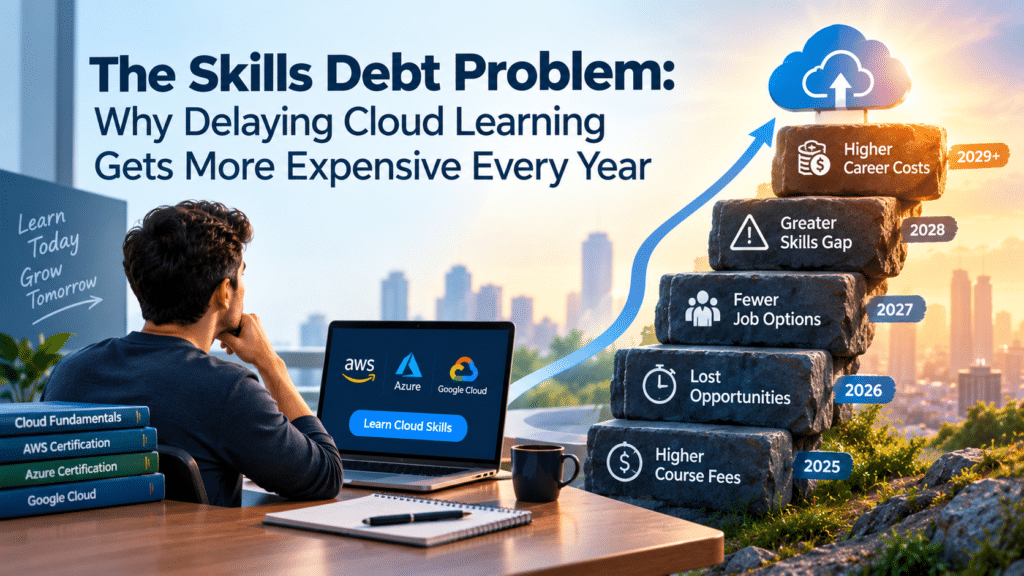
If your team all runs the same older stack, there’s no peer pressure to change. Find a study partner, join a class or tell your manager your goal out loud. Waiting is the default, and it gets pricier every year, as we explain in The Cloud Skills Debt Problem.
Your Legacy IT Skills Aren’t Worthless: They’re Launch Pads
Here’s the encouraging part. Many organisations run a mix of on-premises and cloud systems, so people who understand both worlds are genuinely useful. Your legacy IT skills give you a head start on the Azure certification that matches your role:
- Sysadmins and infrastructure engineers: AZ-104 Azure Administrator builds on what you already know about servers, storage, identity and monitoring.
- Network engineers: AZ-700 Azure Networking Solutions reuses your routing, DNS, firewall and hybrid connectivity knowledge.
- Developers: AZ-204 Developing Solutions for Azure moves your application experience onto cloud services.
- Security professionals: AZ-500 Azure Security Technologies extends identity, access and threat-response skills.
- DevOps and release engineers: AZ-400 DevOps Solutions turns manual deployment habits into automated pipelines.
- Senior engineers and architects: AZ-305 Azure Solutions Architect lifts design experience to cloud scale.
- New to cloud, or from a non-technical role: AZ-900 Azure Fundamentals is the friendliest starting point.
Think of it this way: your legacy IT skills tell you why things break. Cloud skills tell you how to build things that don’t. Together they’re a stronger profile than either one alone.
How to Escape the Pull of Legacy IT Skills: A 90-Day Plan
You don’t need to quit your job or overhaul your life. You need a small, protected routine. Try this:
- Weeks 1–2: Name the pull. Write down which of the seven forces hits you hardest. Naming it makes it easier to resist.
- Weeks 1–2: Protect learning time. Block two 45-minute sessions each week and treat them like a critical incident. They don’t move.
- Weeks 3–4: Pick one certification. Match it to your current role using the list above rather than chasing the “hottest” exam.
- Weeks 5–8: Learn by doing. Use hands-on labs and rebuild something familiar, such as a file server or a network, inside Azure.
- Weeks 9–10: Test yourself. Sit mock exams, fix weak areas and book the real exam.
- Weeks 11–12: Use it at work. Propose a small automation or migration task and update your LinkedIn profile with what you’ve built.
Structured instructor-led training helps here because it removes the planning. Someone else sets the pace, the labs are ready and you’re surrounded by people on the same path.
Azure Certification Paths for Australian IT Professionals
You can see every option on the Azure certifications page, including the Fundamentals category for newcomers. Classes run live online and in person, so it’s easy to fit them around work. If you prefer a local option, check the pages for Sydney, Melbourne, Brisbane, Perth, Adelaide or Canberra, or browse the full locations page.
It’s worth reading widely, too. Microsoft Learn publishes the official certification details and exam skills outlines, the Australian Computer Society offers professional membership and community, and Jobs and Skills Australia tracks workforce and skills trends. For another view of Azure training, see this Azure course overview.
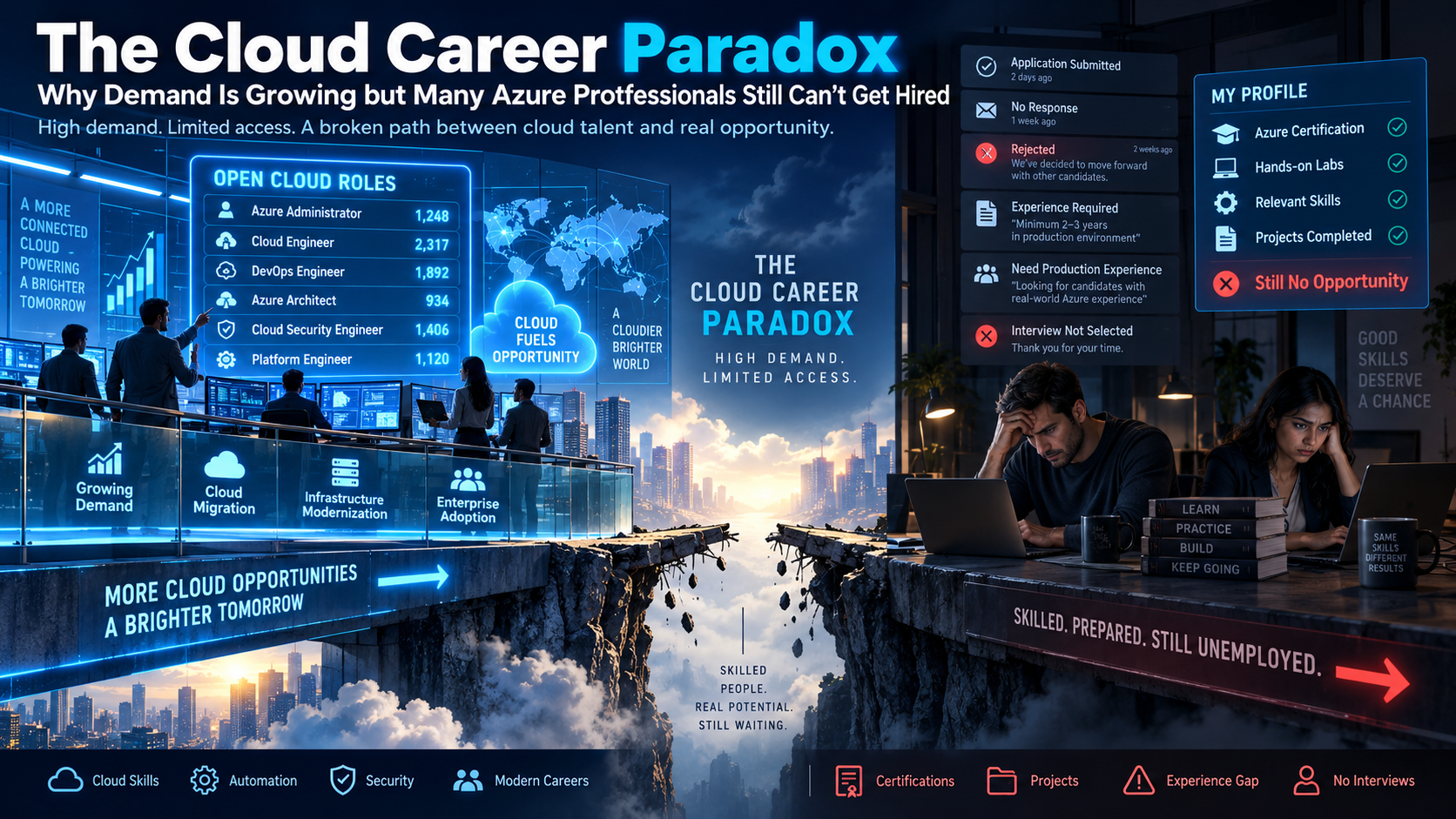
Already certified but still not getting interviews? Read The Azure Certification Trap and The Cloud Career Paradox to see what hiring managers look for beyond the exam result.
Legacy IT Skills FAQs
What are legacy IT skills?
They’re skills tied to older technologies and ways of working, such as on-premises infrastructure, manual deployments and older enterprise applications. They’re still useful, but relying on them alone can limit career options.
Should I stop using my legacy IT skills?
No. The goal is to add cloud skills on top, not to throw experience away. Professionals who understand both older and newer systems are well placed for hybrid environments.
Which Azure certification should I start with?
If you’re new to cloud, begin with AZ-900. If you’re an experienced admin, AZ-104 is a natural next step.
Do I need IT experience before an Azure course?
Not for Fundamentals, which suits beginners and career changers. Associate and expert courses are better for people with some IT background. The FAQs page has more detail.
Can I study while working full-time?
Yes. Live online and in-person options mean you can fit study around your job.
Final Thoughts: Escape Velocity Is Built in Small Steps
Rockets don’t escape gravity by trying harder for one afternoon. They commit to a sustained burn. Legacy IT skills will keep pulling at you for as long as they’re the easiest thing to do, so make the new thing easier: a schedule, a goal and a class.
Pick one step from this article and do it this week. If you’d like help choosing a course, contact our team or call 1300 649 299. You can also read more about us or browse the blog for more career advice.