


The cybersecurity decision gap is the distance between knowing a risk exists and actually doing something about it. Almost every Australian organisation has already crossed the first line. The board has seen the headlines, the IT team has flagged the weak spots, and somebody has probably dropped a breach statistic into a slide deck. And yet the fix sits in a backlog for months.
That’s the uncomfortable truth behind a lot of incidents. The problem usually isn’t ignorance. It’s hesitation, unclear ownership and a long list of competing priorities. In this guide we’ll unpack why the cybersecurity decision gap exists, what it really costs, and how teams in Sydney, Melbourne, Brisbane, Perth, Adelaide and Canberra can finally close it.
What Is the Cybersecurity Decision Gap?
Think of the cybersecurity decision gap as the space between a risk being identified and a control being implemented. It’s different from the two problems people usually blame:
- Awareness gap: people don’t know the risk exists.
- Skills gap: people know the risk but can’t fix it without training or hiring.
- Decision gap: people know the risk, have (or could get) the skills, and still don’t act.
The third one is the sneaky one. Awareness campaigns and phishing simulations don’t touch it, because nobody in the room is confused. They’re just not deciding. A cybersecurity decision gap can survive for years inside an otherwise well-run business, because every individual delay looks reasonable on its own.
Why Organisations Know the Risk but Still Don’t Act
If you’ve ever sat in a risk review where everyone nodded and nothing changed, you’ve seen this first-hand. Here are the patterns that keep showing up.
1. The risk feels abstract, but the cost feels real
Multi-factor authentication rollout has a visible price: licences, staff complaints, help-desk calls. A breach that might happen next year has no invoice yet. Humans are wired to weigh the certain, immediate cost more heavily than the uncertain, future one, and a boardroom is full of humans.
2. Nobody clearly owns the decision
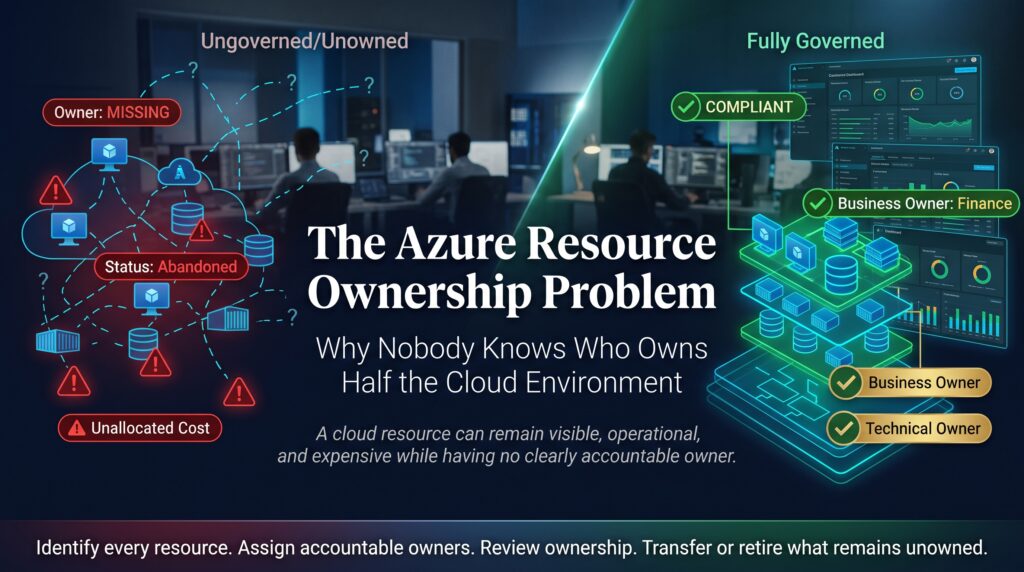
Security touches IT, legal, finance, operations and HR. When a risk belongs to everyone, it effectively belongs to no one. The IT manager can recommend, but can’t fund. The CFO can fund, but doesn’t feel qualified to judge. So the item gets “noted”. This is the same pattern we see in cloud estates, where nobody knows who owns half the environment.
3. Competing priorities win the budget meeting
Revenue projects have a champion and a deadline. Security work rarely does. When both are on the table, the project with a launch date beats the project that prevents a problem nobody can see.
4. Fear of breaking something that works
Patching a legacy server, tightening conditional access or removing old admin rights can interrupt people’s day. Teams delay because “it’s been fine so far”, not realising that “fine so far” is exactly what every breached organisation was saying the week before.
5. Alert fatigue and normalised risk
When dashboards show hundreds of medium-severity findings, leaders stop seeing any of them. Risk becomes background noise, and the cybersecurity decision gap quietly widens.
6. The confidence to execute is missing
Sometimes the hesitation is really a skills issue in disguise. A team that isn’t sure how to roll out Microsoft Entra ID conditional access without locking out the CEO will understandably keep it on the “next quarter” list. Practical, hands-on training turns that fear into a plan.
What Leaders Say vs. What Is Really Happening
| What you hear | What’s usually going on | How it widens the gap |
| “We’ll look at it next quarter.” | No owner, no deadline, no budget line. | The item rolls forward every quarter. |
| “We haven’t had an incident.” | Survivorship bias; weak signals go unnoticed. | Risk is treated as zero until it isn’t. |
| “It’s too disruptive right now.” | No tested rollout plan or rollback option. | Change fear beats risk fear. |
| “IT will handle it.” | Decision needs funding and authority IT doesn’t hold. | Responsibility without power stalls action. |
| “We need more data first.” | Analysis becomes a way to avoid choosing. | Findings pile up; controls don’t. |
Cybersecurity Decision Gap Examples You’ll Probably Recognise
You don’t need a dramatic scenario to spot the cybersecurity decision gap. It tends to hide in boring, well-understood controls:
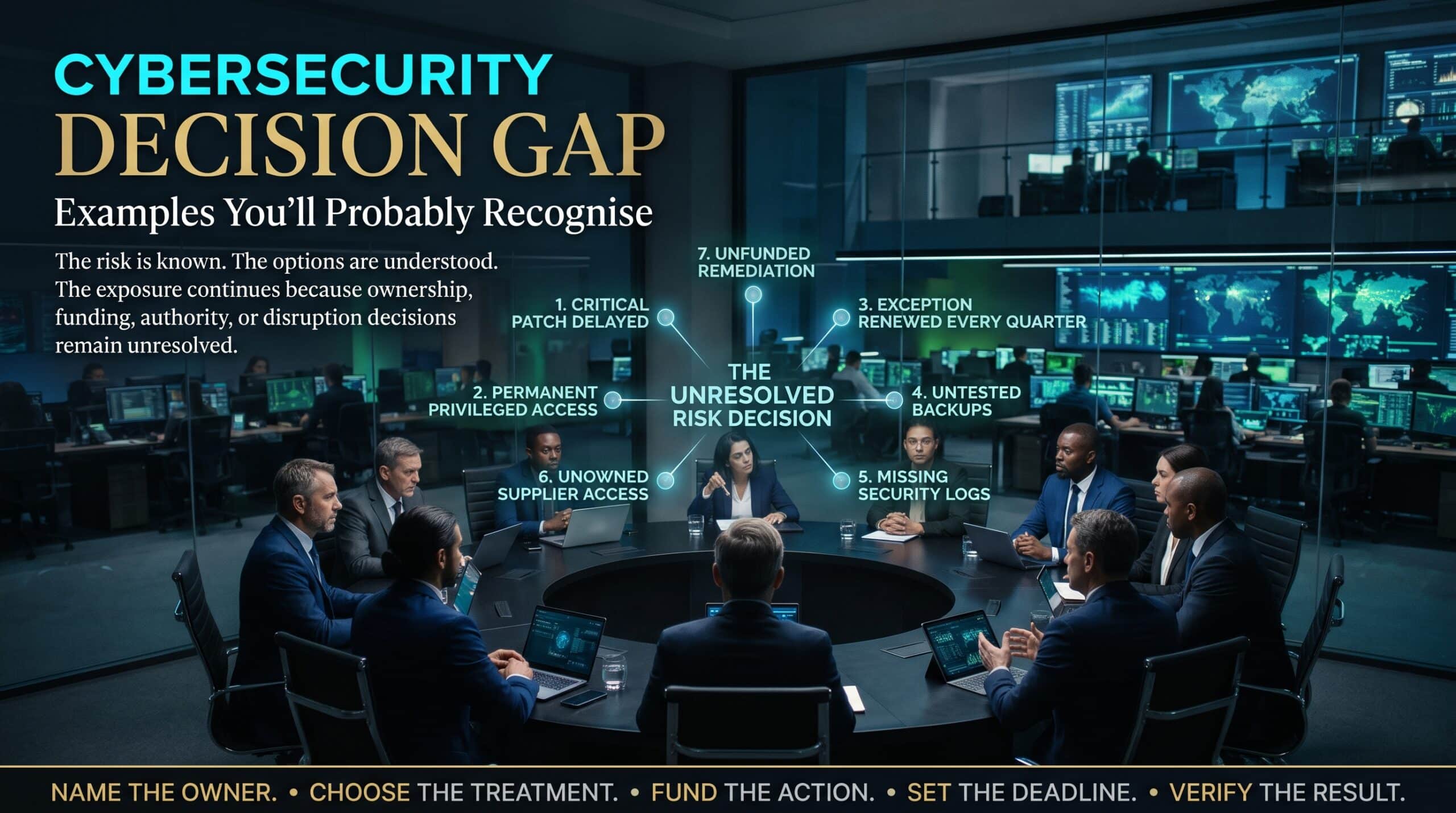
- MFA on admin accounts: approved in principle, still not enforced for every privileged user.
- Patching: a critical update waits weeks for a maintenance window that never gets scheduled.
- Access reviews: former contractors still have live accounts because nobody owns the review.
- Backups: taken every night, restored never, so nobody knows if they actually work.
- Logging and monitoring: Microsoft Defender for Cloud and Microsoft Sentinel are switched on, but alerts aren’t triaged.
- Cloud policy: rules exist on paper, yet Azure Policy drift quietly erodes them.
None of these need a new product. They need a decision, an owner and a date.
What the Cybersecurity Decision Gap Really Costs
The direct cost of a breach is only part of the story. IBM’s annual Cost of a Data Breach report consistently shows that detection time, response speed and the maturity of security controls shape how expensive an incident becomes. In other words, delay is not neutral. It has a price that rises the longer a known weakness stays open.
In Australia there’s a regulatory layer too. Under the Notifiable Data Breaches scheme, organisations covered by the Privacy Act 1988 must notify affected individuals and the Office of the Australian Information Commissioner (OAIC) when an eligible breach is likely to cause serious harm. “We knew about the gap” is a very difficult sentence to say in that conversation.
Then come the softer costs: customer trust, cyber insurance renewals, staff morale during an incident, and the leadership time burned on cleanup instead of growth.
How to Close the Cybersecurity Decision Gap: A Practical Plan
Closing the cybersecurity decision gap isn’t about scaring people into action. It’s about making decisions easier to take, easier to own and harder to postpone.
- Name one accountable owner per risk. Not a team, a person. Give them the authority to decide or to escalate.
- Translate technical risk into business language. “Unpatched server” becomes “a realistic path to customer data exposure and a mandatory breach notification.”
- Set decision deadlines, not discussion deadlines. Every open risk gets a decide-by date: accept, fix or transfer.
- Start with a recognised baseline. The ACSC’s Essential Eight gives Australian organisations a prioritised set of mitigation strategies, and the NIST Cybersecurity Framework offers a common language for risk conversations.
- Make the secure option the default. Use Conditional Access, Azure Policy and role-based access control so good behaviour is automatic, not optional.
- Review declined risks quarterly. If leadership accepts a risk, record it, sign it and revisit it. Accepting is a decision; ignoring isn’t.
- Invest in capability. Teams act faster when they trust their own skills. That’s where structured training pays off.
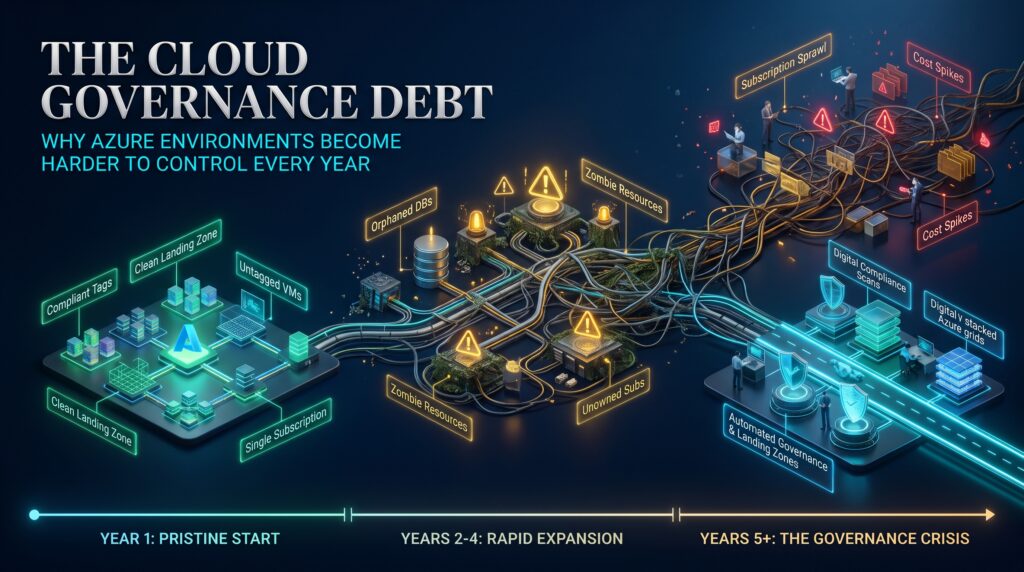
If your cloud environment is part of the problem, our guides on the Azure governance gap and cloud governance debt show how small, unmade decisions compound over time.
How Skills and Certification Help Close the Cybersecurity Decision Gap
Confidence is a surprisingly strong driver of action. When engineers understand how identity protection, network security and threat detection really work, they stop treating security changes as risky experiments and start treating them as routine engineering.
For teams running on Microsoft Azure, the role-based certification path maps neatly onto this:
| Certification | What it builds | Decision it helps unblock |
| AZ-900 | Cloud and security fundamentals | Gives non-technical leaders shared vocabulary to approve security spend. |
| AZ-104 | Azure administration | Confidence to roll out identity, networking and policy changes safely. |
| AZ-500 | Azure security technologies | Implementing identity, platform, data and threat protection controls. |
| AZ-305 | Azure solution architecture | Designing secure-by-default, governed environments from the start. |
| AZ-400 | DevOps solutions | Embedding security checks into delivery pipelines. |
The AZ-500 Azure Security Technologies course is the most direct fit for security engineers. Microsoft’s own page for the Azure Security Engineer Associate certification outlines the skills measured. If you’re not sure where to begin, our Azure certification roadmap and full certification list will help you choose. For broader security skills beyond Azure, see the cybersecurity training courses and Azure courses from Logitrain.
Cybersecurity and Azure Security Training Across Australian Cities
Whether your team is in a CBD office or spread across states, closing the cybersecurity decision gap works best when people learn together and apply it straight away.
- Sydney: financial services, government suppliers and tech teams can book Azure security training in Sydney.
- Melbourne: home to our West Melbourne centre, with Azure certification courses in Melbourne for classroom and live online learners.
- Brisbane: Azure training in Brisbane suits growing cloud and managed-service teams.
- Perth: resources, mining and engineering businesses can use Azure courses in Perth via live online or in-house delivery.
- Adelaide: Azure certification training in Adelaide supports defence, health and education sectors.
- Canberra: public sector and contractor teams can explore Azure training in Canberra for security-focused upskilling.
You can see every option on our Azure certification locations page.
Frequently Asked Questions
What is the cybersecurity decision gap?
The cybersecurity decision gap is the delay between identifying a security risk and implementing a control to address it. It happens even when awareness and skills exist, usually because of unclear ownership, competing priorities or fear of disruption.
Why do organisations ignore cybersecurity risks they already know about?
Rarely out of carelessness. Future risk feels less urgent than present cost, responsibility is spread across teams, and security changes can feel disruptive. Without a named owner and a deadline, known risks stay on the list.
How do I convince leadership to act on cybersecurity?
Frame the risk in business terms such as downtime, customer data exposure, regulatory notification and insurance impact. Bring a costed option, a rollout plan and a decide-by date, rather than a list of vulnerabilities.
Which Azure certification covers security?
AZ-500 (Azure Security Technologies) is the main role-based security certification for Azure, while AZ-900 is a good starting point for anyone new to cloud and security concepts. See our FAQs for more guidance.
Can a whole team be trained together?
Yes. Group and in-house options are available, so your team can learn the same practices at the same time. Contact us for dates and pricing.
Final Thoughts: Turn Knowing Into Doing
Every organisation will carry some risk. What separates resilient ones isn’t a bigger tool budget, it’s a shorter distance between “we know” and “we’ve fixed it”. Shrinking the cybersecurity decision gap starts with ownership, a deadline and a team confident enough to act.
Ready to build that confidence? Explore the AZ-500 course, browse the latest articles on our blog, or call 1300 649 299 to talk through the right path for your team.