


The future skills test is a simple thought experiment with an uncomfortable edge. Imagine your current job is advertised tomorrow. You have to apply for it from scratch, with no tenure, no goodwill and no “we have always relied on you”. Would you be hired again today?
Most people answer too quickly. They think about what they have done, not what the role now requires. The gap between those two things is where careers quietly stall. This guide walks you through a practical five-question version of the future skills test, shows what employers actually look for in an IT hire today, and gives you a 90-day plan to close any gaps, including the Azure certification pathway.
What Is the Future Skills Test?
The future skills test is a self-audit built around a single question: if I applied for my own role today, would my current skills, evidence and habits win the job? It is not about job loyalty or your employer’s plans. It is about measuring your capability against today’s market, not the market you joined.
Think of it as a reverse interview. Instead of waiting for a restructure or a recruiter to reveal your gaps, you reveal them yourself, privately, while there is still time to act calmly. People who run this test regularly tend to adapt earlier and with less stress than those who wait for the market to run it for them.
Why the Future Skills Test Matters in a Fast-Changing IT Market
Technology roles change faster than job titles. The same title, such as systems administrator or network engineer, can mean very different day-to-day work from one year to the next. Much of that change is driven by cloud computing and platforms like Microsoft Azure, which have moved many tasks from server rooms to software-defined services.
Hiring managers respond to that shift. They write job ads around current tools, current security expectations and current ways of working. A candidate whose experience is deep but dated can look weaker on paper than a newer candidate with fresh, verified skills. This is the reason the future skills test matters even when you feel secure in your job:
- Roles evolve quietly. Responsibilities shift long before a title changes.
- Tools turn over. What was standard five years ago may be legacy today.
- Evidence beats assumption. Employers want proof of current skills, not a list of past duties.
- Restructures are fast. If you are ever back in the market, you will be compared with people who prepared early.
The 5-Question Future Skills Test
Answer each question honestly with yes, partly or no. Nobody else will see your score.
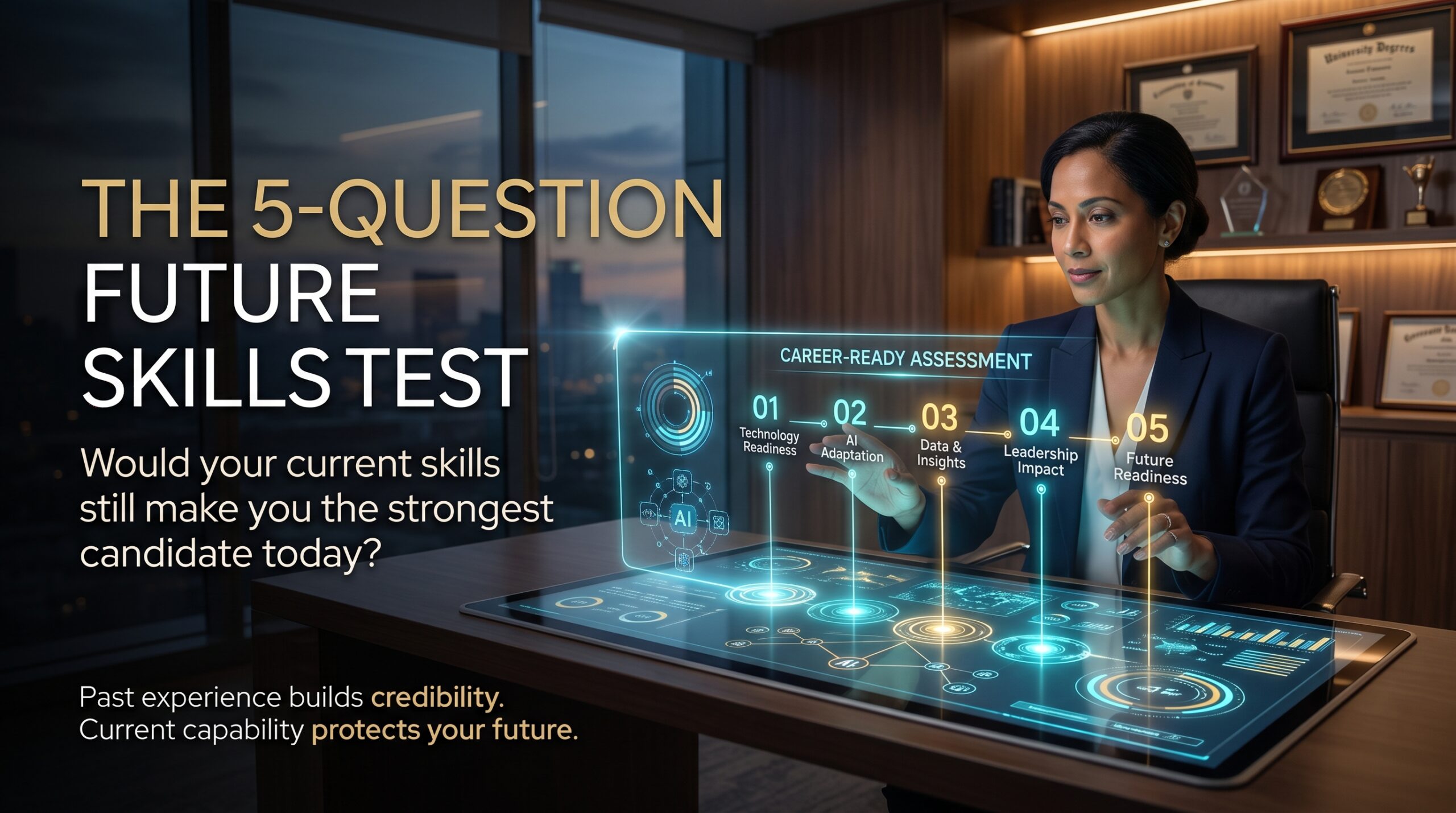
1. Could I pass today’s technical interview for my own role?
Look at three recent job ads for your role at other companies. Can you speak confidently about at least 80 per cent of the skills they list? If the language feels unfamiliar, that is useful information.
2. Can I explain the tools my team uses now, not three years ago?
Being able to use a tool and being able to explain why it is used are different skills. Interviewers probe the second one.
3. Can I show recent proof of my skills?
Proof can be a current certification, a documented project or a lab you built. A certification from Microsoft’s official certification program is a clear, independent signal that is easy for recruiters to verify.
4. Do I understand how cloud, security and automation connect?
Modern IT roles rarely live in a single silo. Cloud platforms, identity and access, security controls and automation overlap. Knowing the basics of all four makes you more flexible and more valuable.
5. Do I learn on a schedule, or only when forced?
This is the habit question. Regular learning, even a few hours a week, is the single best predictor of a good result next year too. The idea behind lifelong learning is simple: skills are maintained, not earned once.
Scoring. Four or five “yes” answers means you are in strong shape, so keep your rhythm. Two or three means you have gaps worth patching in the next quarter. Zero or one means act now, while you still have choices.
What Employers Look For When Hiring Today
- Current cloud skills. Practical knowledge of platforms such as Azure, not just theory.
- Verified credentials. Recognised certifications that validate skills independently.
- Security awareness. Every role now carries some responsibility for protecting data and access.
- Learning agility. Evidence that you pick up new tools quickly.
- Clear communication. The ability to explain technical choices to non-technical colleagues.
- Results, not duties. Examples of outcomes you delivered, with numbers where possible.
Why People Fail the Future Skills Test
Failing it is common, and it is rarely about talent. The usual causes are surprisingly ordinary: skills that are tied to legacy systems, certifications that are several versions old, no hands-on practice outside of work, and the quiet assumption that experience alone will always be enough.
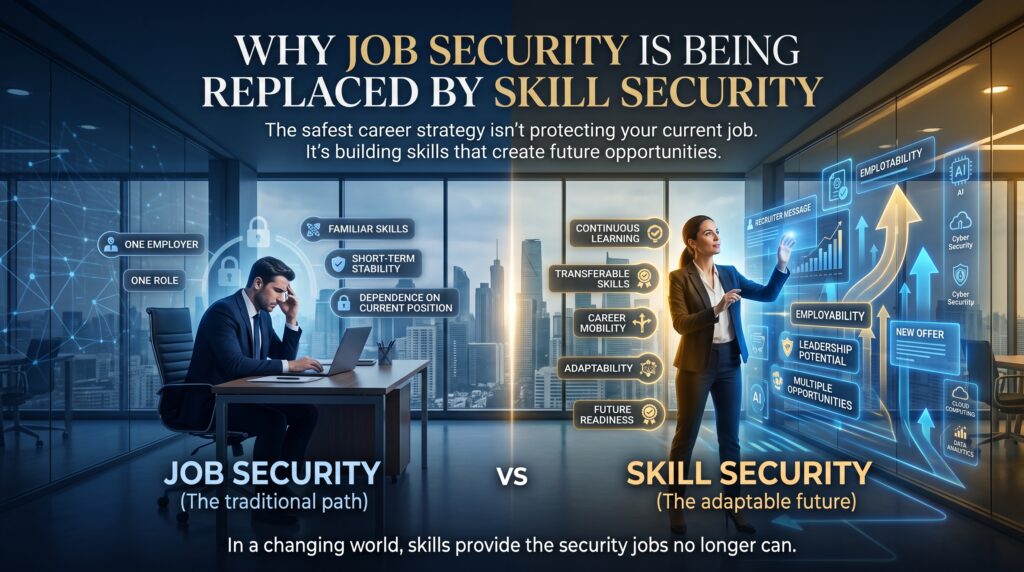
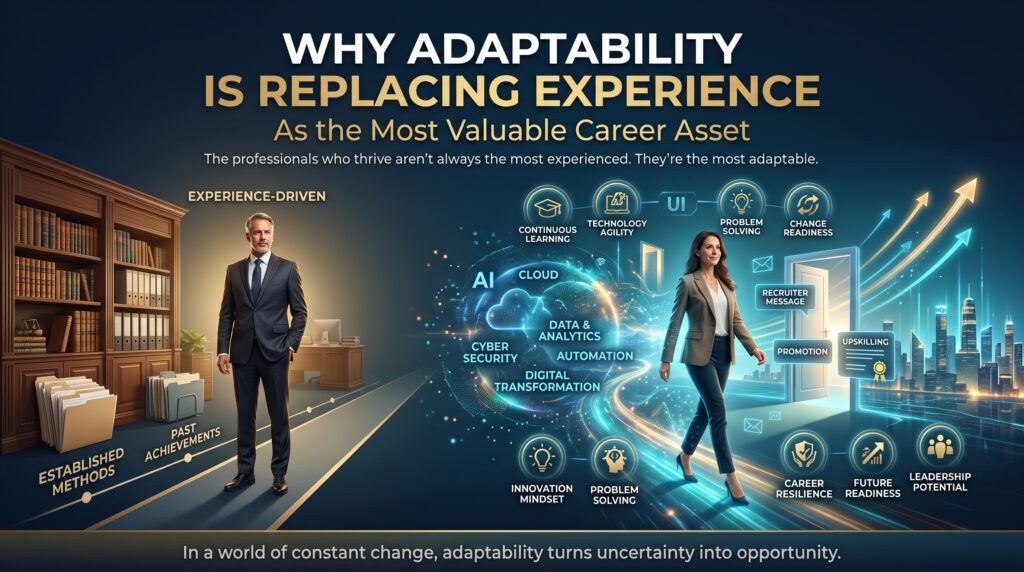
If any of that sounds familiar, you are in good company. Our blog explores the same pressures from different angles, including legacy IT skills, why adaptability is replacing experience, skill security versus job security and the knowledge behind the interface. If cloud is the missing piece, read the comfort zone tax of avoiding cloud skills and the cost of waiting to learn Azure.
How to Pass the Future Skills Test in 90 Days
- Write your own job ad. Describe your role as if you were hiring for it today, then compare it with real postings.
- List your gaps. Mark each required skill as strong, shaky or missing.
- Pick one priority. Choose the gap that would matter most in an interview.
- Choose a target credential. A certification gives your learning a finish line and gives employers a clear signal.
- Book structured training. Instructor-led, hands-on courses are faster than piecing together scattered tutorials.
- Practise in labs. Build and break things in a safe environment, then document what you learned.
- Update your profile. Add the new skills, credential and project to your CV and professional profile, then re-run the test.
Azure Certification Training in Australian Cities
For many IT professionals, cloud skills are the quickest way to improve a future skills test score. Azure Certifications AU offers instructor-led courses for learners in Melbourne, Sydney, Brisbane, Perth, Adelaide and Canberra, with live online and in-house options. See all training locations.
Follow the role-based pathway that fits your next step. You can also review the full Azure certification roadmap or compare options on the Azure certification comparison page.
- AZ-900 Azure Fundamentals: a solid foundation in cloud concepts and core Azure services.
- AZ-104 Microsoft Azure Administrator: implement, manage and monitor enterprise Azure infrastructure.
- AZ-204 Developing Solutions for Microsoft Azure: for developers building cloud solutions.
- AZ-700 Azure Networking Solutions: for professionals designing and managing Azure networks.
- AZ-500 Azure Security Technologies: implement advanced security controls for cloud identities, data and networks.
- AZ-305 Azure Solutions Architect: for designing scalable Azure solutions.
- AZ-400 Microsoft DevOps Solutions: for DevOps and delivery pipelines.
Questions? Visit About Us, the FAQs or the blog, or contact the team on 1300 649 299 to discuss group and in-house training.
Frequently Asked Questions
What is the future skills test?
The future skills test is a self-audit that asks whether you would be hired again today for your current role, based on your present skills, proof of those skills and learning habits rather than your history.
How often should I take the future skills test?
Once or twice a year is a sensible rhythm, and again whenever your role, tools or team change significantly.
What should I do if I fail the future skills test?
Do not panic. List your gaps, pick the most important one, set a 90-day goal and choose structured training or a certification so your progress is visible and verifiable.
Which Azure certification should I start with?
If you are new to cloud computing or Microsoft Azure, AZ-900 Azure Fundamentals is the best starting point before moving to role-based certifications such as AZ-104, AZ-500, AZ-305 or AZ-400.
Do I need IT experience for Azure training?
Not always. Azure Fundamentals is designed for beginners, career changers, students and non-technical professionals, while associate and expert courses suit learners with relevant IT experience.
Conclusion: Run the Test Before Someone Else Does
It is uncomfortable for a good reason. It replaces vague worry with specific information you can act on. Run it today, be honest about the result and fix one gap at a time. Your future self, and your next interviewer, will notice the difference.
If you are ready to strengthen your cloud credentials, explore the Azure certification courses or talk to our team today.