


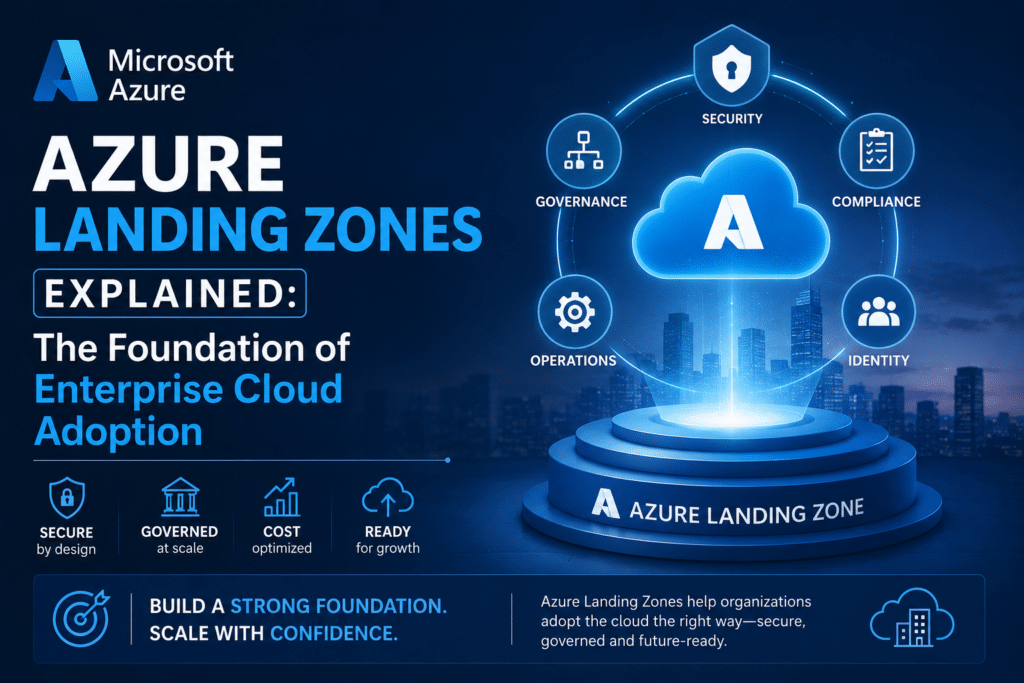
Azure landing zones are the piece of enterprise cloud architecture that decides whether everything built afterward is secure, governed and scalable or a patchwork of subscriptions nobody can fully explain two years later. If you’re an architect, administrator or IT leader planning a serious move to Azure, understanding landing zones properly isn’t optional background reading; it’s the foundation everything else sits on.
This guide breaks down what Azure landing zones actually are, the core components every enterprise deployment needs, how they fit into Microsoft’s Cloud Adoption Framework, and which certifications build the skills to design and implement one properly relevant whether you’re based in Melbourne, Sydney, Brisbane, Perth, Adelaide or Canberra.
What Is an Azure Landing Zone?
An Azure landing zone is a pre-configured, governed environment that provides the platform foundation identity, networking, security, policy and management structure that workloads are deployed into. Rather than every project team spinning up its own subscription with its own ad-hoc naming conventions, permissions and network rules, a landing zone gives every workload a consistent, secure starting point.
The term comes from Microsoft’s Cloud Adoption Framework (CAF), which defines landing zones as the scalable, modular architecture that supports an organisation’s entire Azure footprint — not a single application, but the platform underneath every application.
Why Azure Landing Zones Matter for Enterprise Cloud Adoption
Without a landing zone, organisations typically end up with what Microsoft calls “subscription sprawl” dozens of inconsistently configured subscriptions, unclear ownership, inconsistent tagging, and security gaps that only surface during an audit or incident. Azure landing zones solve this by establishing governance, network topology and identity structure before workloads are deployed, not after.
For enterprises managing sensitive data, regulatory obligations or large multi-team environments common across Australian finance, healthcare and government organisations landing zones aren’t a nice-to-have. They’re what makes Azure defensible at audit time and scalable as the organisation grows
Core Components of Azure Landing Zones
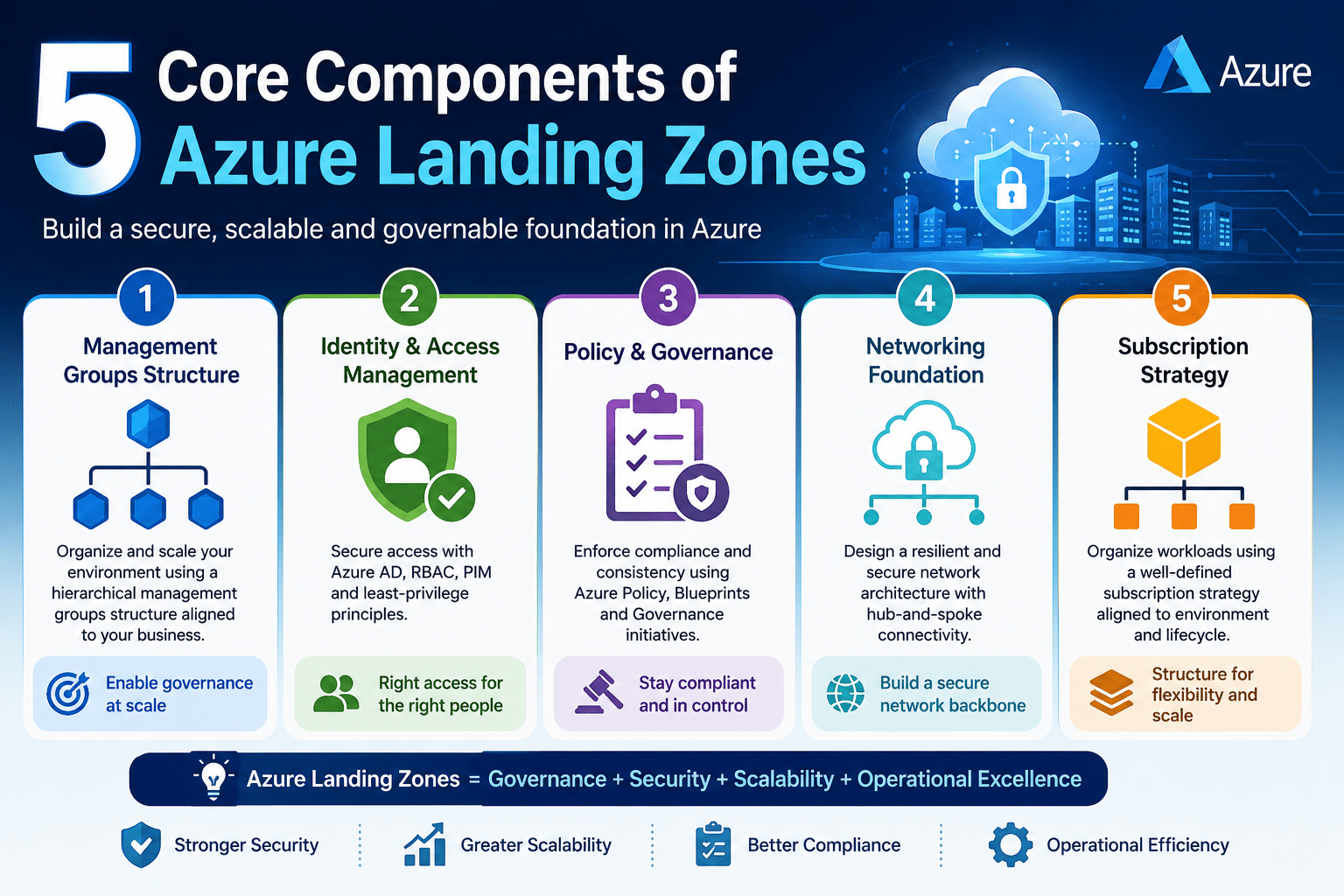
Management Group and Subscription Hierarchy
Landing zones organise subscriptions under a structured management group hierarchy, allowing policies, RBAC and cost controls to be applied consistently at scale rather than subscription by subscription.
Identity and Access Management
A properly designed landing zone integrates with Microsoft Entra ID (formerly Azure AD) to enforce consistent role-based access control, conditional access and privileged identity management across every workload deployed into the environment.
Networking Topology
Most enterprise landing zones use a hub-and-spoke network model, centralising shared services like firewalls, VPN gateways and DNS in a hub, with individual workloads deployed into isolated spoke networks a pattern most Azure networking-focused certifications cover in depth.
Policy and Governance
Azure Policy is used to enforce rules automatically restricting resource locations, requiring encryption, blocking non-compliant SKUs so governance is enforced by the platform itself rather than relying on manual review.
Security Baseline
A landing zone typically includes Microsoft Defender for Cloud, centralised logging via Azure Monitor and Log Analytics, and a defined security baseline that every workload inherits automatically on deployment.
Platform Landing Zones vs Application Landing Zones
Microsoft’s Cloud Adoption Framework distinguishes between platform landing zones the shared foundation covering identity, networking, management and governance and application landing zones, which sit on top of the platform and host individual workloads. This separation is what lets platform teams manage governance centrally while application teams deploy independently within safe, pre-approved boundaries.
Azure Landing Zones and the Cloud Adoption Framework
Azure landing zones are one part of Microsoft’s broader Cloud Adoption Framework, which also covers strategy, planning, governance and management phases. In practice, most enterprises don’t build a landing zone entirely from scratch they start from Microsoft’s reference architectures and adapt the identity, networking and policy configuration to their own compliance and business requirements.
Who Designs and Manages Azure Landing Zones?
- Azure Solutions Architects design the overall landing zone architecture, network topology and governance model.
- Azure Administrators implement and maintain subscriptions, resource groups and day-to-day platform operations.
- Azure Security Engineers configure policy, Defender for Cloud and identity controls within the landing zone.
- DevOps Engineers build the automation and infrastructure-as-code pipelines that deploy landing zones consistently.
Build the Skills to Design and Manage Azure Landing Zones
Azure landing zones sit at the intersection of architecture, security, networking and governance, which is why the relevant Microsoft certifications map closely to the roles involved in building one.
If you’re new to Azure, start with AZ-900 Azure Fundamentals to build core cloud concepts before tackling landing zone architecture. For hands-on platform skills, AZ-104 Microsoft Azure Administrator covers subscription management, governance and monitoring the operational side of running a landing zone day to day.
The certification most directly aligned with designing Azure landing zones is AZ-305 Azure Solutions Architect, which covers governance, identity, networking and infrastructure design at the architecture level. Pair it with AZ-700 Azure Networking Solutions for the hub-and-spoke networking patterns landing zones depend on, and AZ-500 Azure Security Technologies for the identity and policy controls that secure it.
If your landing zone is deployed through infrastructure-as-code pipelines, AZ-400 Microsoft DevOps Solutions covers the CI/CD and automation skills to deploy and maintain it consistently across environments.
Courses run in person in Melbourne, Sydney, Brisbane and Perth, with live online delivery for professionals in Adelaide and Canberra.
Related Reading
If you’re still deciding which certification to pursue first, see our guide to AZ-900, AZ-104, AZ-204 or AZ-305? Choosing the Right Azure Path, our breakdown of Azure Security Certifications Explained: From Fundamentals to AZ-500, and Azure OpenAI Explained: What Azure Professionals Need to Know for how AI workloads fit into a well-governed landing zone.
Frequently Asked Questions
Do small businesses need an Azure landing zone?
Not usually in the full enterprise sense. Landing zones are built for organisations managing multiple teams, subscriptions or compliance obligations. Smaller environments can still apply the same governance principles at a lighter scale.
Is Azure Landing Zone a specific product?
Not exactly it’s an architectural pattern defined by Microsoft’s Cloud Adoption Framework, implemented using Azure services like management groups, Azure Policy and Microsoft Entra ID, often deployed via Microsoft’s reference templates or Terraform/Bicep modules.
Which certification is best for learning Azure landing zones?
AZ-305 (Azure Solutions Architect) covers landing zone design most directly, but AZ-104, AZ-500 and AZ-700 each cover a component (administration, security and networking respectively) that a real landing zone depends on.
Conclusion
Azure landing zones are the unglamorous but essential foundation that determines whether enterprise cloud adoption scales safely or turns into an ungoverned mess of subscriptions. Getting the identity, networking, policy and security layers right up front using Microsoft’s Cloud Adoption Framework as the reference point is what separates a resilient Azure environment from one that’s expensive to unwind later.
Ready to build the skills to design or manage one? Explore our Azure certification courses across Australia or get in touch with our team.